Monday, August 2, 2010

Jillian+South Korea+Living+2 Weeks: A Bulleted Guide


** Hiking in South Korea is intense. These are my conclusions:
- I’ve encountered zero switchbacks. Thus, trails consist of escalating lodged rocks. There is little light at the end of the tunnel.
- Rock steps appear at a 90-degree angle from the base.
- Korean hikers, as they are for every other occasion, are exceptionally well dressed. Outfits are neon and sharp. They also cover almost every inch of the body. Sun protection is critical here.
- There are hikers, GOOD hikers, of all ages.
- They drink soju at the summit. (Okay, that’s not too bad of a gig).

** Hiking at Songnisan National Park (san=mountain)
- Name refers to “Remote from Ordinary World”
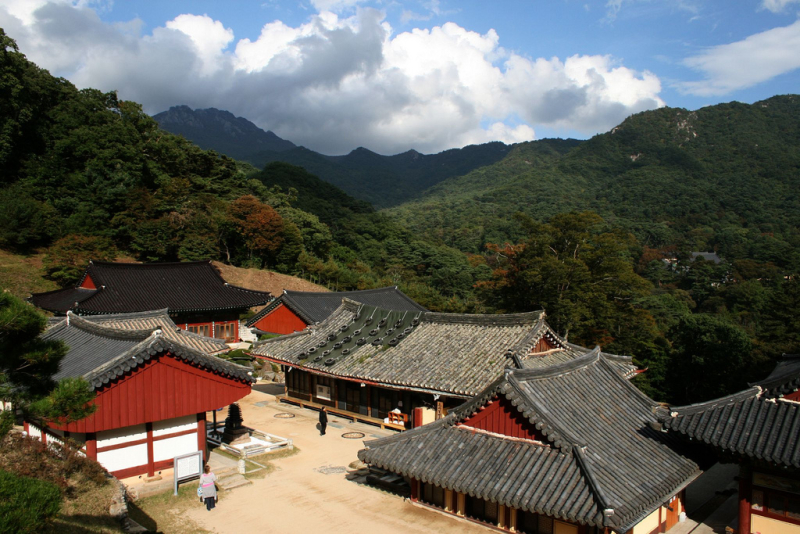
- Some background compliments of Wikipedia: Beopjusa (법주사), initially constructed in 553, is a head temple of the Jogye Order of Korean Buddhism situated on the slopes of Songnisan in Naesongni-myeon, Boeun County, in the province of Chungcheongbuk-do, South Korea. Golden Maitreya Statue of National Unification at Beopjusa is a 33-meter-high, 160-ton Buddha covered in 80kg of gold leaf erected in 1990 at a cost of $4 million. Yes, you read that right; there is a giant Buddha in the middle of the mountains covered in gold. Hmm…
- The mountain's highest peak is Cheonhwangbong, at 1,058.4 m. I made it there! Great hike, except my tush was so sore I slept through my alarm the next day, which besides almost making me late to my Korean test, it also took away from my study time. I failed. My legs felt like bricks the whole day. I wasn’t too friendly.

** Our trial lessons at the English Camp finished last week. These Korean students ranging from 5th to 10th grade were absolutely brilliant. We were spoiled in comparison to the actuality of our students. I taught 3 lessons: Learning Pop Culture through Fortune Tellers (recall Elementary school days of asking students their favorite color and number to extract who their crush was on those origami-shaped paper fortune tellers); Writing Realistic Dialogue; and Social Studies lesson on MLK where students devised their own versions of “I Have a Dream.” Each lesson got subsequently better. Our role is to teach conversational English. And to be quite frank, we are supposed to do so in an “entertaining” way—rather than following a strict objective format. This is quite different than I anticipated given the Korean style of rote learning. More on teaching later, though.

** I ate "PahtBingSu"—see attachment for picture.
http://www.kokoliving.com/women/2010/07/korean-shaved-ice-desert-pahtbingsu.html
- While walking back from Goesan, the small gritty town where I currently reside, my friends and I encountered a group of young Korean children frolicking in the murky water under the bridge. Sweaty and without supervision, these children ran up to us. Upon finding out our nationality, they started chanting “MeGuks!”—or Americans.
- What followed was amusing and slightly scary. They immediately attacked my tall, attractive male friend, flicking his head, yanking at this arm hair, and even trying to push him off the guardrail.
- In the next five minutes, we were flicked off, swore at, and given the “shocker” (hand gesture—if you don’t know what it means, google it and brace yourself).
- Mind you, the oldest kid in this gang of Korean monsters couldn’t be older than ten (American age, that is—In Korea, a newborn is accredited one year of life) and they live in a rural, inland city—where students have far less experience with English than those in metropolitan areas.
- Needless to say, my face was pained from laughter.
** I practiced archery from Coach Kim's training center. This location is the training center for South Korea's 2008 Olympic-winning team! What a rush! By the end of 4 rounds (6-7 arrows each), I finally got two bulls-eyes. Oh yeah, baby.

** I SUCCESSFULLY navigated my first travel experience this past weekend in Chenogju, South Korea.
- Staying in a small, but exceptionally clean/non-sketchy motel, myself and two other girls explored this nearby “suburb” (suburbs are constituted by population and are not what American conceive of suburbs as in they sit on the outskirts of a larger city). This city has a population of nearly 600,000 people.
- I got to eat American food! After rice, soup, and kimchi for every single meal, I was thrilled to dine at “Pizza Hut.” I never thought I’d see this day come. Sigh.
- We explored Chungpuk National University area. Not for academics, but for the nightlife.
- From recommendation of past ETAs and my “Lonely Planet” travel guide, we ventured to a small bar called “Pearl Jam.” No Koreans heard of it as we asked approximately 7 people for directions along the way. This s because it’s the hotspot for foreigners—English teachers—Canadians, Australians, and Brits tossed back 2000 won shots at happy hour (11-12 PM).
- Everything is open late in Korea. Boutiques were still buzzing before I had my first drink at 11:30 pm. Good thing too because I got to raid the goodies at “Paris Baguette” at 1:40 PM. Chaa-ching. Success!
- Lastly, we went to the gook jang (movie theater). “Inception” was a dynamite selection for their state-of-the-art theaters. For 8,000 won, we were assigned a seat in a mammouth theater—and not just any seat, an overstuffed, reclining velour Lazyboyesque that is—with 12 inch armrests on either side to ensure that BOTH people could rest their arms. Also, there are aisles—people don’t have to trip over others to make a quick qwayjanshel (bathroom) break.
- Also, my Korean friend told me there are “love theaters.” Yes, couple seats with cubby hole-like quarters. He also said blankets are supplied. Ahh, yes.

** What I do in my free time:
- Watch TV on my beautiful new MacBook (thank you, Mom and Dad—she is treating me well here). I am currently on season three of my new addiction, HBO’s “The Wire.” Yes, I am little behind but I need some form of catharsis after four hours of Korean language study a day.
- Study Korean. We have to pass our class to fulfill requirements of our grant.
- Ponder writing in my blog. Emphasis on “ponder.”
- Pinch myself. I need to remind myself I am in the middle of South Korea.
- Practice “Insa”—the formal introduction that includes bowing and saying the proper form of “Hello.” I have to put it to use very soon—as I will be meeting my principal and co-teacher very shortly. Not too mention, my host family! Yikes.
- Countdown the days until Peter comes to see me.
- Skype.
- Hang out on the “Veranda”—the “chill” spot here. Sort of. Since our halls are segregated, there are few places both sexes can congregate comfortably. This is one of them.
- Miss all of you!

** What to look forward to:
- PLACEMENT! I find out in two days where I will be placed for the entire year. In addition, I will know what type of school (middle or high school);, age of students, level of students, gender, and size of school where I will be teaching. There will be a formal ceremony where we get “pinned” in front of a very influential crowd. Pinning means we put a marker on a giant map where we will be located in South Korea. Keep your fingers crossed for a good placement!
- More information about Korean culture as we are participating in Korean culture workshops for the next two weeks.

Wednesday, July 21, 2010

Haeinsa: Temple of Reflection on a Smooth Sea


Traveling to Haeinsa after two weeks of orientation—and before the kick-off of Camp Fulbright—was exceptional timing. In summation, Haeinsa provided me with the following: access to sought-after knowledge, Buddhism at-large and the role/function of a monk therein; time for personal reflection and self-adjustment; socialization with new individuals in a new, unexplored environment; hiking—an outlet for my physical energy and zeal for the outdoors; and lastly, greater exposure to Korean culture, namely food presentation and etiquette.

To elaborate some, I will outline some of the highlights of my trip. Foremost, getting introduced to monsoon season while trekking up Gaya Mountain to visit the Temple was quite an experience. In a lot of ways, it provided what I thought to be a candid and honest presentation of Korea. Thrust high above sea level and enclosed by bellowing mountains and steamy fog provided an eerie and omniscient backdrop to Haeinsa. Exploring the ins and outs of the many unmarked (well, unmarked to me because my Korean is limited to Hi. How are you? Where are you going?) buildings and exchanging photography tips with some of the more well-equipped and insightful photographers made me feel connected to my environment. I saw the landscape in terms of composition. This is a new lens for me.

Besides traveling through sacred texts and mediation rooms, I also enjoyed the traditional and “very formal” (according to Ji Soo, our RA) Korean dinner (Bulgogi). Sitting among individuals who are beginning to transcend acquaintances and digesting foreign tastes and textures, I developed a sincere appreciation for having this opportunity as an ETA. The room was humming with human liveliness and zest. Also, getting to practice bowing and reciting pre/post dinner blessings in that setting was excellent preparation for many similar upcoming dining experiences.

As for Saturday, I woke up early to travel to the traditional drum ceremony held at Haeinsa. Expecting something trying and possibly dull (envisioning dedicated patience and silence), I was pleasantly surprised by the ceremony. One monk chatted casually with us beforehand and even cracked a joke or two, which set a much different tone immediately. What followed was a rich display of foreign sounds and rhythms. Recording some sounds and working to get precise camera angles (employing my photography tips from the day before, you see!), the temple exploded with energy once the drumming began. Older Korean tourists ran to the “holy” water, gulping it rapidly in route to the mandala where they walked briskly and precisely in a mapped maze—a tradition that asks walkers to forget their worries and let their minds free.

After Haeinsa, I did two of the best things of the entire trip. For starters, I got to hike. I regret not starting earlier though, for we did not get to hike to the top, as evening was approaching too soon and the Park Ranger instructed us otherwise. Nonetheless, a group of about six girls got to trump up the side of Gaya Mountain, stopping to enjoy one of the six bridges we crossed, admire the breathtaking scenery, and once, we even threw off our shoes and waded around in the chilly, rushing water. I got to spend some time conversing one-on-one with new individuals and outlet my increasing energy—a double whammy!

Last on my list for Haeinsa would be my first trip to a traditional Korean spa. What a treat that was! Having hardly any inclinations about what the experience would be other than a quick glance of a poster while driving in, I was overwhelmed with curiosity and liberation once inside. For one, there were so many pools, rooms, temperatures, women (of all ages), showers, scrubbing devices, and saunas to distract my attention. How’s a girl supposed to navigate this? Not to mention, I am in the nude, something I have limited experience with, especially surrounded by loads of fellow females. But what a tremendous way to unwind after a day of hiking—the view was priceless and I, as well as the girls I ventured down there with, got to giggle and relax while the Korean women asked us questions, pointed out differences on our bodies, and just generally acted intrigued by us. The whole experience was something I’ll never forget.
 

Thursday, July 15, 2010

Cultural Nuances and Ramblin'

June 14, 2010—Day 10

Sitting under the veranda in front of my campus overlooking the immaculate golf course and the misty mountains descending into the skyline, I am discussing the headaches of this program with Clint, a developing friend and eager conversationalist (which, of course, for those who know me is quite essential to my survival). There is a breeze, which balances the sticky humidity and we are questioning how as individualists we have to reevaluate our understandings of social order in order to adapt to Korean group (or collectivist) culture.

Well, let me back up. Before our two hour afternoon lesson on games and projects in the classroom, we had a 45 minutes lecture on our poor ability to present ourselves effectively as a group—and further how important it is to become a vital part of the group in Korea and how we will less be remembered as individuals—but rather judged as a whole entity. Studying intercultural communication with an Asian professor has richly shaped my understanding of collectivism in East Asian culture, perhaps more so than some of my colleagues here. I am learning, though, what appears generally “commonsense” or of common knowledge is not necessarily the case—i.e. the juxtaposition of individualism and collectivism, primarily focusing on how these dueling paradigms affect one’s daily life in that respective culture.

Although we will focus more intensely on cultural issues when our orientation nears our placement time (given the fact that we will be placed in homestays), it seems as though this topic would be essential to survival here; thus, a lecture early on—not after the fact—seems entirely more relevant. At any rate, apparently we should be more aware of the importance of first impressions of the group. Group, group, group. I am finally experiencing what I spent four years studying—the subjection of the self for the wealth of the group. Coming from a country where we value independence and emphasis personal development, this process is not a smooth one. Some of the fellow ETAs (English Teaching Assistants) were slightly outraged—large in part because it’s confusing—for instance, when students socialize out at a bar, it is common for one to pay for all, knowing that someone else in the group will cover the tab at another time, rather than figuring out the bill, splitting it a bajillion ways, and collecting wadded money from a bunch of a drunk hooligans—this American way of covering tabs would be embarrassing and result in a loss of face. This is just one example, but it also happened to be the one discussed today—other than that our lecture was rather confusing and it was hard to connect the dots about how our actions reflected poorly as a group. Anyways, that’s my ramble and that’s how the headache formed—well, that and the fact, I spilled coffee on myself I think a grand total of 8 times in a 45 minute interval. This of course was while I stared helplessly and nodded apologetically to my exceptionally dressed and rather handsome Korean teacher (who has developed a humorous way of teasing my poor pronunciation abilities—like making “Jillian’s Row” when he makes us individually pronounce words that have words very similar with only very subtle differences—of course, I don’t even get the word or words close to the one he is attempting to teach us correct).

Enough about that nonsense. Even typing that brings out bittersweet feelings—I am beginning to understand that one’s relationship to language is quite tumultuous. Some days I am overwhelmed with an enormous sense of accomplishment, a feeling that comes from having the ability to say the most basic phrases—thank you, hello, goodbye, etc.—because having these phrases has enriched my experience. I can thank the sweet woman who hands me soup each day at the end of the cafeteria line. I can also thank the woman at the convenience store who chuckles at me each day as I practice out what I’ve learned on her (She thinks I am “fun.”). In contrast, though, frustration amounts easily from the pace and structure of the class environment. New vocabulary is growing substantially, concepts are introduced quickly and with little time for questions, and after 3.5 hours my eyes are too thirsty to stare at the board. I am sure some of you can sympathize with this experience, but I hope you’ll repeat what I’m thinking—that it will be absolutely worth it.

To switch gears a bit, I thought I’d introduce something not related to Korean culture. As a disclaimer, I have not studied these dynamics, but as a communication major and one who is interested in the study of human relation, I am curious about the progression and maintenance of virtual face-to-face communication, or in laymen’s terms, SKYPE. To contextualize my experience with Skype, I am currently utilizing it to maintain a long-distance relationship with my boyfriend, Peter. With a fourteen-hour time difference and minimal experience respectively, it has taken some time for us to adjust to this mode of communication. The progression has fascinated me. Since two of the closest friends I have made here ironically are in very similar LDRs (Long Distance Relationships), we have swapped skyping tips and secrets. We’ve also disclosed about our levels of intimacy and the difficulties we experience in trying to foster and again, maintain (I hate to repeatedly use this word, but I can’t seem to find one that fits appropriately at this time) this essential part of our budding relationships. I use the term “budding” because each of us were in the comfortable “getting to know each other” stages of our relationships (each of us has been dating for 5-6 months each) when we departed for this cultural exchange.

All in all, logistics aside (sorry for rambling and being overly detailed—it’s a habit I am ridiculously aware of but often do little to control it), Skype, I believe, has transformed the concept of long-distance dating. Superficially, this seems like commonsense, I mean sure, seeing one obviously softens the distance; however, I’d argue this transgression is much more complex. For instance, the amount of self-disclosure is higher I believe than if I only had access to a cell phone. Also, keep in mind Skype is FREE. So besides complications due to the time difference, Skype permits a richer, unrestrained communication channel. I believe some of the challenges one faces (i.e. the cliché: out of sight, out of mind) are less complex when he or she can communicate face-to-face. Non-verbal communication can be achieved, which complicates discussion—this is something absent from all other modes of long distance correspondence (phone, letters, emails, and instant messaging). Having access to the emotional component of another person through face to face communication provides a much more substantial element to the relationship that (I hope) helps mend the gaping nature of physicality.
Anyways—that’s my rant/blurb about that. I’d be curious what others have to say about this phenomenon. And I’ll certainly be contributing to it further, as it appears that I’ve lost some steam.

By the way, Asians love westerners. Cute story to end this entry with—outside our building, waiting for next lecture, 45 middle school girls walk by. Almost all say “hi!”—but one group starts yelping, exclaiming…”Beautiful, beautiful! Ohh, ohh (after they say my eyes), BLUE, blue! Oh mY Gosh.! We love you! We love you!”

Of course, I had my princess strut on after that encounter.

I’ll return after this weekend. I leave for the temple in one hour. I’m working on getting albums together, so be patient and I’ll share photos in no time. Please share your love.

Jillian

Tuesday, July 13, 2010

Preview of Weekend Trip to Haeinsa


Check it out! This weekend all 73 of us will venture into the mountains to visit Haeinsa Temple, National Treasure #52. More to come about this adventure.